
Asphalt paving and maintenance may be built around physical work, but a growing part of the customer journey now happens digitally. Property owners research contractors online, commercial managers request estimates electronically, customers expect quick responses, and businesses have to coordinate scheduling, follow-ups, payments, and ongoing maintenance alongside field operations. These expectations are creating room for more automated ways of handling the commercial side of the business.
Agentic commerce is one development that could reshape this process. It refers to commerce in which AI-powered agents can perform multi-step tasks on behalf of users or businesses with varying degrees of autonomy. Instead of simply presenting information or answering a question, an agent may help compare options, organize information, recommend a next action, initiate transactions, or coordinate parts of a purchasing process.
For companies providing asphalt paving and maintenance services, this shift could eventually affect everything from how customers discover contractors to how estimates, maintenance schedules, and repeat services are managed. The value is not in replacing paving expertise but in reducing friction around the many commercial tasks that surround the actual job.
Moving From Basic Automation to More Active Digital Assistance
Traditional business automation generally follows predetermined instructions. A customer submits a form, an automatic confirmation is sent, and the information enters a system for someone to review. This saves time, but a person still has to decide what happens at many stages.
Agentic systems are designed to take a more active role. An AI agent could interpret what a customer needs, collect relevant details, determine the appropriate next step, and coordinate with other systems before handing the request to an employee. For a paving company, this could mean distinguishing between a residential driveway inquiry and a large commercial maintenance request and then directing each through an appropriate process.
That distinction matters because paving businesses receive inquiries with very different requirements. Some customers may need a simple repair estimate, while others may be planning resurfacing across a large property. More capable automation can help businesses organize those requests without forcing employees to manually sort every initial interaction.
Making the Early Customer Journey More Efficient
Finding a paving contractor can require customers to move through several stages. They may research different services, determine whether they need repair or replacement, contact several businesses, arrange inspections, compare estimates, and decide when the work should be completed. Each additional step creates an opportunity for the customer to delay the project.
Agentic commerce could make parts of this journey more connected. A digital agent may eventually help customers describe their pavement problem, provide relevant property information, identify suitable service categories, request availability, and organize estimates with less manual searching.
This also changes what paving companies need from their online presence. Clear information about service areas, project types, capabilities, scheduling, and maintenance options becomes increasingly important when both people and digital agents are evaluating businesses. Companies with organized and accessible information may be easier to include in digitally assisted purchasing decisions.
Helping Paving Companies Respond to Leads More Effectively
Lead response is an important part of winning service work. A potential customer requesting an estimate may contact several contractors, particularly when dealing with a significant driveway, parking lot, roadway, or commercial pavement project. Waiting too long to respond can reduce the chance of turning that inquiry into a job.
Agentic technology could help businesses manage the steps between receiving an inquiry and arranging a site visit. A system might identify the type of request, gather missing information, determine whether the property falls within the service area, and offer suitable scheduling options. Staff members could then focus their attention on requests that require professional assessment rather than spending as much time on routine administration.
Human involvement would remain particularly important when pricing depends on pavement condition, dimensions, drainage, base preparation, access, materials, or other site-specific factors. The role of agentic systems is therefore more likely to be supportive: preparing better information so professionals can make decisions faster.
Supporting More Organized Estimating and Scheduling
Estimating asphalt work involves more than giving customers a single number. Contractors may need to consider site size, pavement condition, labor, equipment requirements, materials, preparation work, travel, drainage issues, traffic management, and project timing. Larger commercial jobs can involve additional coordination.
Agentic systems could help organize information before an estimator evaluates the project. Details submitted by customers could be categorized, incomplete requests could be flagged, and supporting information could be prepared for review. This may reduce some of the repetitive administrative work surrounding estimates.
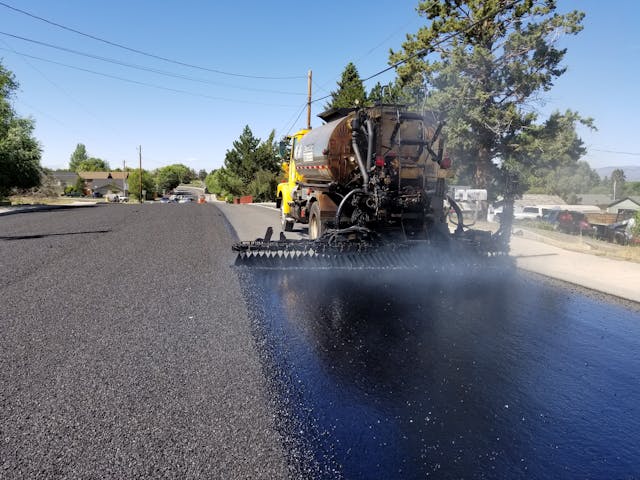
Scheduling could benefit as well. Paving operations are affected by crew availability, equipment, job locations, project duration, and weather conditions. Intelligent systems could help coordinate these variables and identify practical scheduling options while leaving final operational decisions to people who understand field conditions.
Creating New Opportunities for Preventive Maintenance
Many pavement problems become more expensive when they are ignored. Small cracks can expand, water can penetrate damaged areas, and surface deterioration can eventually require more substantial repair. Yet customers do not always know when maintenance should be considered.
Agentic commerce could help shift some customer relationships from reactive repairs toward planned maintenance. With appropriate customer information and permissions, systems could track previous service dates, maintenance intervals, property characteristics, and other relevant factors. They could then identify when a customer may be approaching a reasonable time to inspect the pavement or consider another service.
This could be especially useful for organizations responsible for multiple properties. Rather than treating every pavement problem as an isolated purchase, property managers could have more organized maintenance histories and reminders. Contractors, meanwhile, could develop longer-lasting customer relationships built around ongoing pavement care.
Making Commercial Account Management Easier
Commercial paving work often involves more stakeholders and administrative steps than a typical residential project. Property managers, facility teams, business owners, contractors, and financial personnel may all participate in approving and coordinating work.
Agentic systems could help organize routine parts of these relationships. They may assist with retrieving previous project information, preparing service histories, coordinating inspection requests, tracking approvals, or notifying relevant people when action is required. Reducing repetitive administrative work can be particularly useful when a contractor manages many active commercial accounts.
There is also potential for agents representing buyers and sellers to interact with one another. A property-management agent might eventually identify a maintenance requirement and communicate with systems operated by qualified contractors to collect information or begin a purchasing workflow. Human approval can still be retained for significant commitments, especially where project specifications and costs require professional judgment.
Preparing for Customers Who Use AI Agents to Find Contractors
Agentic commerce is not only about the technology used internally by paving companies. Customers may increasingly rely on AI assistants to research services and narrow down potential providers. Instead of manually opening numerous websites, a user could ask an agent to identify contractors that meet particular requirements.
This means businesses may need to think about whether their information can be clearly understood by automated systems. Service descriptions, geographic coverage, project capabilities, contact methods, business details, and other essential information should be consistent and easy to interpret.
Reputation will continue to matter as well. An autonomous system still needs reliable information when determining which businesses are suitable for a request. Accurate service information, credible business details, customer feedback, and a clear digital presence can therefore become increasingly important as AI plays a larger role in service discovery.
Keeping Human Judgment in High-Value Decisions
Despite the potential for automation, asphalt work cannot be reduced entirely to digital transactions. Pavement conditions vary considerably, and important decisions may require an experienced professional to inspect the site. Drainage problems, base failure, unusual traffic loads, accessibility requirements, or extensive deterioration can significantly change what work is appropriate.
Agentic systems should therefore support rather than remove professional judgment. They can handle routine information gathering, communication, scheduling, and administrative tasks while escalating unusual or high-value decisions to experienced employees.
Businesses also need appropriate controls around customer data, pricing, approvals, and transactions. Giving an automated system greater autonomy makes oversight more important, not less. Companies adopting these technologies will need to decide which actions can happen automatically and which should always require human authorization.
A More Connected Future for Asphalt Businesses
Agentic commerce is unlikely to change how asphalt itself is installed overnight. Crews, equipment, materials, site preparation, safety procedures, and skilled judgment will remain central to successful paving and maintenance. The more immediate change is likely to happen around the commercial processes that connect customers with those services.
From handling inquiries and organizing estimates to coordinating maintenance and managing commercial accounts, agentic systems could reduce administrative friction across the customer journey. They may also change how customers discover and evaluate paving contractors as AI agents become more involved in purchasing decisions.
For asphalt paving and maintenance businesses, modernization does not have to mean automating every task. It can mean identifying repetitive processes that technology can handle while preserving human expertise where it matters most. Companies that combine efficient digital systems with dependable field operations will be better positioned for a commercial environment in which customers, businesses, and increasingly their digital agents interact more closely.
Leave a Reply