
Most people begin looking for device repair only after something goes noticeably wrong. A phone stops charging, a battery drains unusually quickly, an application repeatedly crashes, or the device suddenly becomes unreliable. The customer recognizes the problem, searches for a repair provider, compares options, and then decides what to do.
Agentic commerce could gradually change this sequence. Instead of waiting for users to identify every problem and manually search for a solution, AI agents may increasingly help recognize needs, research suitable services, compare available options, coordinate appointments, and manage parts of a transaction on the user’s behalf. In tech repair, this creates an interesting possibility: the journey toward fixing a device could begin before the owner actively starts shopping for repair services.
From Reactive Repairs to Proactive Assistance
Traditional repair is largely reactive. Something fails, the customer notices, and the search for a solution begins. Even relatively predictable problems are usually addressed only when they become inconvenient enough to demand attention.
Connected devices already generate information about battery condition, storage, software performance, temperature, and other aspects of operation. With explicit permission and appropriate access, more capable AI agents could potentially use relevant device information to help users recognize when a problem deserves attention. The agent might explain the issue, suggest basic troubleshooting, or determine that professional repair should be considered.
This does not mean an AI agent would automatically know exactly what is physically wrong with a device. Hardware diagnosis can still require inspection and testing by a trained technician. The difference is that the agent could help move the customer from noticing unusual behavior to seeking appropriate assistance more efficiently.
Searching for Repair Services Could Become an Agent’s Job
Finding a repair provider currently involves considerable manual effort. Customers may search online, open several websites, compare reviews, check locations, determine whether their particular device can be serviced, and contact businesses for information about availability and pricing.
An AI agent could potentially handle much of this initial research. A customer might simply instruct an agent to find an appropriate repair option based on factors such as the device problem, location, expected turnaround time, business reputation, and budget.
This would change how repair companies compete online. Businesses would no longer be presenting information only to human visitors. Their service details may also need to be easily interpreted by digital agents comparing providers on behalf of customers.
Accurate information about repair categories, operating hours, service areas, appointment processes, and other practical details could therefore become increasingly important. A business that clearly communicates what it can and cannot repair may be easier for both customers and AI systems to evaluate.
Booking a Repair With Less Customer Effort
Once customers find a repair provider, they still have to arrange the service. They may need to call during business hours, describe the problem, confirm whether the repair is offered, and find an appointment that fits their schedule.
Agentic commerce could compress these steps. With user authorization, an agent might communicate the basic device problem, identify available appointment times, compare them with the customer’s schedule, and prepare a booking for approval. In some situations, customers may choose to allow agents to complete routine bookings automatically within predefined limits.
The benefit is not simply faster scheduling. It reduces the number of small tasks a customer has to manage. Instead of spending time moving between search results, calendars, and contact forms, the person can focus on the decisions that actually require their attention.
Giving Repair Shops Better Information Before a Device Arrives
The advantages of agentic systems are not limited to customers. Repair businesses could also receive more structured information before the device reaches a technician.
A typical customer may describe a problem simply as “my phone is slow” or “the battery is bad.” An intelligent intake process could ask relevant follow-up questions and organize the answers before the appointment. It could record when the problem began, whether the device has been damaged, what troubleshooting has already been attempted, and which symptoms occur most frequently.
Technicians would still perform their own diagnosis, but better initial information could make intake more efficient. It may also help the business determine whether a particular problem is within its service capabilities before the customer makes an unnecessary trip.
The important distinction is that automated information gathering should support technical judgment rather than replace it. A preliminary digital assessment should never be presented as a guaranteed diagnosis when physical inspection is required.
Agentic Commerce Could Transform Repair Estimates
Pricing is one of the biggest questions customers have when deciding whether to repair a device. At the same time, accurate estimates can be difficult because the visible symptom may not reveal the full extent of the problem.
AI agents could make the early estimating process more organized by collecting device details, known symptoms, service history, and available repair information. When standardized pricing is available for a clearly defined service, an agent could potentially present that information directly to the customer.
More complicated cases would still need technician assessment. If additional damage is discovered, the system could notify the customer, explain the updated estimate, and request authorization before work continues.
This combination of automation and human assessment could create a more transparent process. Customers receive information quickly when the situation is straightforward, while technicians remain responsible for decisions that require actual repair expertise.
Communication During Repairs Could Become More Automatic
One of the most frustrating parts of leaving a phone or laptop for repair is not knowing what is happening. Customers may call repeatedly because they do not know whether the device has been inspected, whether a component is available, or when the repair will be completed.
Agentic systems could manage many routine updates automatically. They might inform the customer when the device enters assessment, when approval is needed, when a delay occurs, and when the repair is complete.
An agent could also decide which information actually requires the customer’s attention. A routine progress update might simply be recorded, while a significant change in price or completion time could generate a request for a decision.
For repair shops, this could reduce repetitive status inquiries. For customers, it could create a sense of visibility without requiring them to repeatedly check on the repair.
AI Agents May Manage Repair Decisions Within Customer-Defined Limits
One of the more significant ideas behind agentic commerce is delegated decision-making. Rather than requiring approval for every small action, users can potentially establish rules describing what an agent is allowed to do.
Imagine a customer setting a maximum repair budget. If a routine repair falls below that amount and meets other requirements established by the customer, an agent could potentially approve the next step. If the estimate exceeds the limit, the decision would return to the customer.
Businesses would need strong safeguards before supporting this kind of interaction. Identity, authorization, payment security, warranties, data handling, and transaction records would all require careful management.
The purpose should be to eliminate unnecessary steps, not to remove customer control. High-cost, unusual, or uncertain repairs should continue to receive appropriate human attention.
Trust and Privacy Become Even More Important
Phones contain enormous amounts of personal information. Photos, messages, documents, saved accounts, financial applications, location histories, and work information may all exist on a single device. Adding AI agents to the repair journey creates additional questions about what information can be accessed and shared.
Customers should remain in control of permissions. A repair-booking agent does not necessarily need access to everything stored on a device simply because it is helping arrange a service. Businesses and technology providers should follow principles that limit information sharing to what is genuinely necessary.
Repair shops also need clear procedures for handling customer devices. Automation can make transactions more convenient, but it cannot compensate for weak security or unclear data practices. In a more automated repair market, businesses that communicate their privacy and device-handling practices clearly may have an important trust advantage.
The Repair Shop of the Future Is Still About Skilled Repair
Agentic commerce may change how customers recognize problems, find repair businesses, schedule appointments, approve work, and receive updates. What it cannot eliminate is the physical reality of device repair.
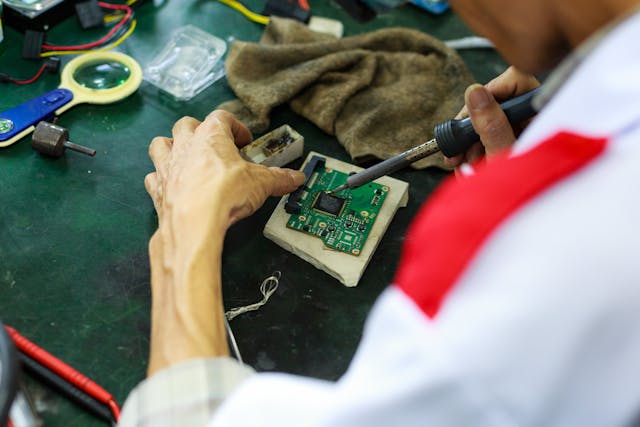
A damaged charging port still needs to be examined. Internal components still need to be handled correctly. Complex faults still require technical knowledge, appropriate tools, and experienced judgment. AI can organize information and coordinate transactions, but it does not automatically make every diagnosis accurate or every physical repair possible.
The bigger change is likely to happen around the technician rather than instead of the technician. Customers may spend less time searching, calling, scheduling, and checking repair status, while repair businesses spend less time managing repetitive administrative tasks.
That creates a different kind of convenience. In the future, the most impressive part of getting a phone repaired may not be simply how quickly the technician fixes it. It may be how little effort was required to recognize the problem, find the right repair option, arrange the service, and get the device back into the customer’s hands.
Leave a Reply